Free admission
Вход свободный
Daily from 11:00 AM to 8:00 PM
| Free admission
 Home
Home
facades
Alexander Brodsky
September 19 — October 6, 2013
Triumph gallery
Triumph gallery
Parallel project of the V Moscow Biennale of Contemporary Art.

Alexander Brodsky (born 1955) is an architectural artist, one of the founders of the paper architecture movement, a Russian representative at the Venice Architecture Biennale (2006), winner of the Kandinsky Prize (2010) and Innovation Prize (2011). He is known for his projects at the intersection of architecture and art. Brodsky’s creative interest is drawn to the themes of memory, lost time, utopia and ruins.
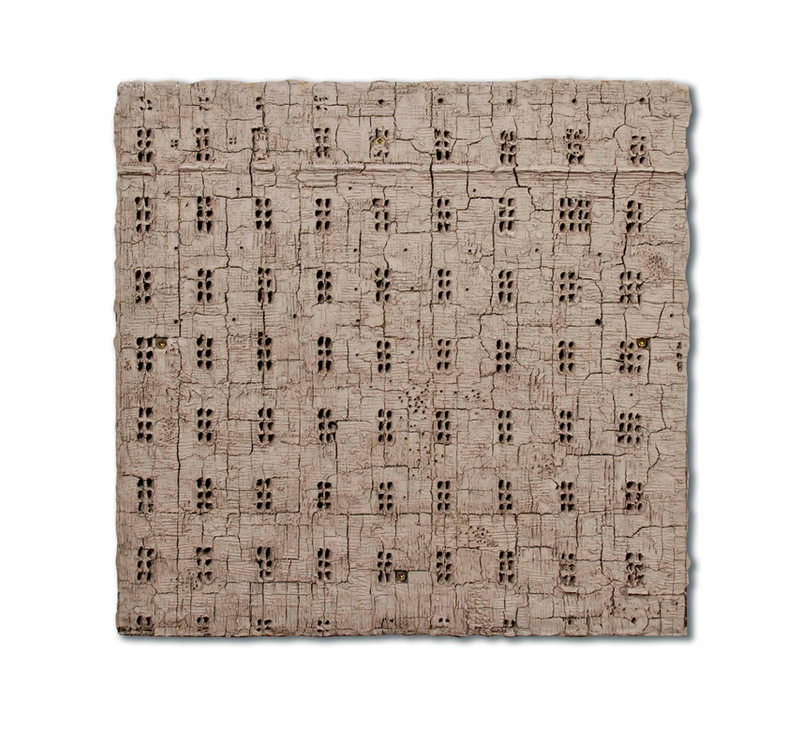
Untitled II
2013
Unburnt clay, metal
93 × 184 × 15 cm
2013
Unburnt clay, metal
93 × 184 × 15 cm
Untitled II
2013
Unburnt clay, metal
93 × 184 × 15 cm
2013
Unburnt clay, metal
93 × 184 × 15 cm
Alexander Brodsky (born 1955) is an architectural artist, one of the founders of the paper architecture movement, a Russian representative at the Venice Architecture Biennale (2006), winner of the Kandinsky Prize (2010) and Innovation Prize (2011). He is known for his projects at the intersection of architecture and art. Brodsky’s creative interest is drawn to the themes of memory, lost time, utopia and ruins.
Alexander Brodsky’s exhibition "Facades" includes new works made of unbaked clay and a large-scale installation that will occupy the entire lower hall of the gallery. This project continues the theme of understanding urban architecture as a visual source of reading history, which is one of the key themes for the artist. Brodsky builds an unnamed city where monumental architectural structures turn into fragile and almost toy houses. High-rise buildings, manufacturing factories, hospitals, and nomenclatural institutions that have lost their functional purpose and value in the eyes of modern society are recreated in the clay works of the artist as relics found during excavations. Placed in box frames, they become a reminder and a warning, and also express the attitude of modern culture to architecture and monuments, and therefore to history, people to each other and their own selves.

Alexander Brodsky’s exhibition "Facades" includes new works made of unbaked clay and a large-scale installation that will occupy the entire lower hall of the gallery. This project continues the theme of understanding urban architecture as a visual source of reading history, which is one of the key themes for the artist. Brodsky builds an unnamed city where monumental architectural structures turn into fragile and almost toy houses. High-rise buildings, manufacturing factories, hospitals, and nomenclatural institutions that have lost their functional purpose and value in the eyes of modern society are recreated in the clay works of the artist as relics found during excavations. Placed in box frames, they become a reminder and a warning, and also express the attitude of modern culture to architecture and monuments, and therefore to history, people to each other and their own selves.

Brodsky speaks to the audience in the universal language of archetypes, and this sensual clarity has earned him recognition from the world audience and leading museums. His works are included in the collections of the State Russian Museum in St. Petersburg, the Tate Modern Gallery and the Victoria and Albert Museum in London, and the Museums of Modern Art in New York and Milan. As the modern Russian poet and novelist Sergei Gandlevsky notes: "Alexander Brodsky, both in his professional capacity and in private communication, is uncharacteristic of grumbling about modern times and mores.; any kind of condemnatory bias is alien to Brodsky in principle: stigmatization and indignation are not his specialty — he is engaged in a detailed farewell and pity for a passing life."
Brodsky speaks to the audience in the universal language of archetypes, and this sensual clarity has earned him recognition from the world audience and leading museums. His works are included in the collections of the State Russian Museum in St. Petersburg, the Tate Modern Gallery and the Victoria and Albert Museum in London, and the Museums of Modern Art in New York and Milan. As the modern Russian poet and novelist Sergei Gandlevsky notes: "Alexander Brodsky, both in his professional capacity and in private communication, is uncharacteristic of grumbling about modern times and mores.; any kind of condemnatory bias is alien to Brodsky in principle: stigmatization and indignation are not his specialty — he is engaged in a detailed farewell and pity for a passing life."
© All rights reserved.
Free admission
Daily from 11:00 AM to 8:00 PM
WE ARE OPEN
Contacts
MENU
