Free admission
Вход свободный
Daily from 11:00 AM to 8:00 PM
| Free admission
 Home
Home
the fate of a man
Roman Mokrov
November 2 — November 14, 2012
Triumph gallery
Triumph gallery
It is well known that the main thing in art is vision. But you have to be able to see. The language used by Roman Mokrov is outspoken and even merciless. He sees things that we all see every day, this white noise of ordinariness — we see, but we don’t notice.

Our consciousness preserves itself by automatically erasing these observations, just as noise is erased. Roman finds his own, unbiased and sincere method. He looks at things directly, and this look is touching and shakes with its power. The author, it would seem, does not make any art out of his observation. Nevertheless, Mokrov’s method of seeing the sociovisual white noise common to all is piercing. Apparently, this is some kind of completely new kind of visual poetry. And it is possible that Mokrov’s artistic act consists precisely in honest, merciless mirroring.
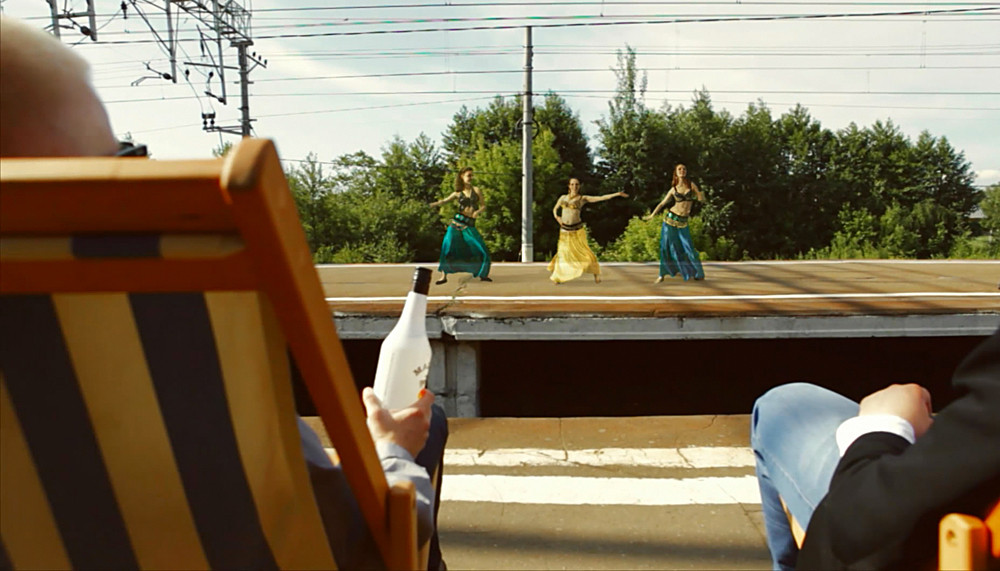
Spring
2012
Video
5’ 26’’
2012
Video
5’ 26’’
Spring
2012
Video
5’ 26’’
2012
Video
5’ 26’’
Our consciousness preserves itself by automatically erasing these observations, just as noise is erased. Roman finds his own, unbiased and sincere method. He looks at things directly, and this look is touching and shakes with its power. The author, it would seem, does not make any art out of his observation. Nevertheless, Mokrov’s method of seeing the sociovisual white noise common to all is piercing. Apparently, this is some kind of completely new kind of visual poetry. And it is possible that Mokrov’s artistic act consists precisely in honest, merciless mirroring.
When you leave after watching his work, there remains a feeling of soulfully dramatic observation in your soul, and for some reason you begin to think about our Russian drama. In a sense, Roman Mokrov is both a poet and a social ecologist. When he takes his photos of people in Khrushchev, it seems that his lens looks at everything like a scientific instrument. The author does not play in fragmentation, he simply observes reality, takes it for what it is, as an endless story of human movement.

When you leave after watching his work, there remains a feeling of soulfully dramatic observation in your soul, and for some reason you begin to think about our Russian drama. In a sense, Roman Mokrov is both a poet and a social ecologist. When he takes his photos of people in Khrushchev, it seems that his lens looks at everything like a scientific instrument. The author does not play in fragmentation, he simply observes reality, takes it for what it is, as an endless story of human movement.

Roman Mokrov was born in the city of Elektrogli (this is not Moscow). "I live in an ordinary five-storey building in the city of Elektrogli. I have a neighbor and a friend Seryozha. We grew up together and are still friends. He always wrote me a lot of messages that don’t require an answer. They are very crisp and clear, a bit like haiku. I collected them for almost a year, then printed them on golden metal plates the size of a phone screen. It turned out to be a whole story of 65 messages. It’s interesting to look at them by date and time when he sent them."
Roman Mokrov was born in the city of Elektrogli (this is not Moscow). "I live in an ordinary five-storey building in the city of Elektrogli. I have a neighbor and a friend Seryozha. We grew up together and are still friends. He always wrote me a lot of messages that don’t require an answer. They are very crisp and clear, a bit like haiku. I collected them for almost a year, then printed them on golden metal plates the size of a phone screen. It turned out to be a whole story of 65 messages. It’s interesting to look at them by date and time when he sent them."
© All rights reserved.
Free admission
Daily from 11:00 AM to 8:00 PM
WE ARE OPEN
Contacts
MENU
