Free admission
Вход свободный
Daily from 11:00 AM to 8:00 PM
| Free admission
 Home
Home
TOPSY-TURVY
Maxim Ksuta
April 16 — June 1, 2014
Triumph gallery
Triumph gallery
Maxim Ksuta is perhaps the only Russian artist who, from project to project, consistently studies the technical and technological capabilities of photography.

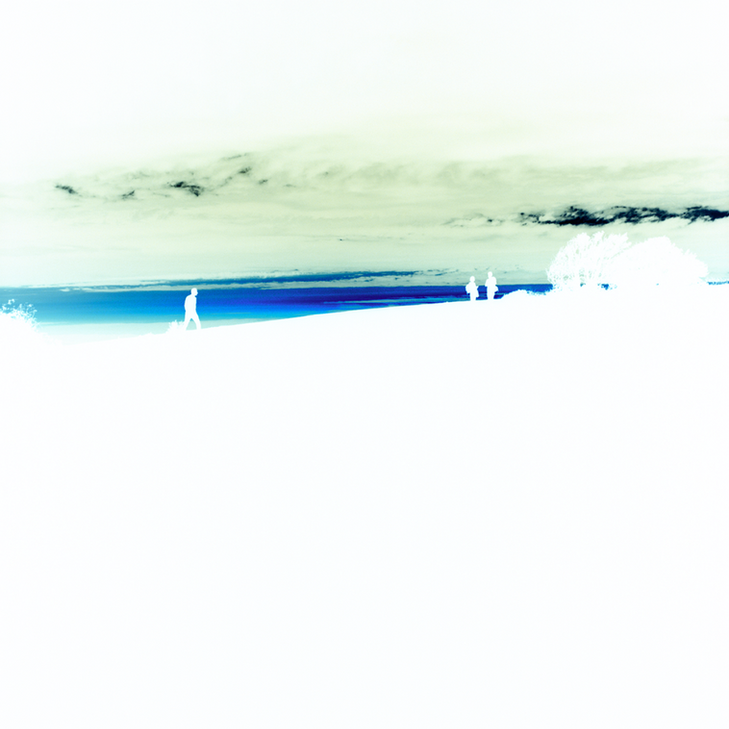
The focus for his interest lies not in the sphere of the photographic image as such (Ksuta, it seems, is not about the image and its suggestive characteristics), but in manipulations of the image received, the decomposition of the photographic process into separate stages and incredibly varied mechanical deconstructions of the image in order, from the artifacts resulting from that deconstruction, to recreate a whole, to reorder the pieces that have broken up and to establish new links. Ksuta plays with reality, using his construction set on it, as it were, as if it can be put through a basic reconstruction as the player wills it; at the same time, he is motivated by another significant circumstance which, in one way or another, could be seen in his very earliest works. Ksuta is categorically at odds with visible reality: at odds with it in the sense that he unavoidably seeks symmetry and order within it, a visual logic which even in its faults helps us to discover beauty. He is always searching for a certain structure, he often invents it, he "imposes" it on landscapes, people, objects; he embeds a skeletal framework into the mass of chance visual impressions.
Ekaterina Inozemtseva
Ekaterina Inozemtseva
What Day of the Month is it?
2013–2014
Photograph printed on alu-dibond
150 × 150 cm
2013–2014
Photograph printed on alu-dibond
150 × 150 cm
What Day of the Month is it?
2013–2014
Photograph printed on alu-dibond
150 × 150 cm
2013–2014
Photograph printed on alu-dibond
150 × 150 cm
The focus for his interest lies not in the sphere of the photographic image as such (Ksuta, it seems, is not about the image and its suggestive characteristics), but in manipulations of the image received, the decomposition of the photographic process into separate stages and incredibly varied mechanical deconstructions of the image in order, from the artifacts resulting from that deconstruction, to recreate a whole, to reorder the pieces that have broken up and to establish new links. Ksuta plays with reality, using his construction set on it, as it were, as if it can be put through a basic reconstruction as the player wills it; at the same time, he is motivated by another significant circumstance which, in one way or another, could be seen in his very earliest works. Ksuta is categorically at odds with visible reality: at odds with it in the sense that he unavoidably seeks symmetry and order within it, a visual logic which even in its faults helps us to discover beauty. He is always searching for a certain structure, he often invents it, he "imposes" it on landscapes, people, objects; he embeds a skeletal framework into the mass of chance visual impressions.
Ekaterina Inozemtseva
Ekaterina Inozemtseva
My project is entirely devoted to a comprehension of a stunning technology discovered about 150 years ago that has become very commonplace and everyday in recent times thanks to its mass distribution as a very convenient tool for the conveying of information. I tried to lay out and note the striking semantic and spatial emphases that form both the process itself and the discussion around modern photography.

My project is entirely devoted to a comprehension of a stunning technology discovered about 150 years ago that has become very commonplace and everyday in recent times thanks to its mass distribution as a very convenient tool for the conveying of information. I tried to lay out and note the striking semantic and spatial emphases that form both the process itself and the discussion around modern photography.

The "border" implies a broad range of opening horizons and vectors in notional tendencies. The border and marginality are fields that haven’t been studied in great depth In the photographic process. Photography is so objective that this super-reality firmly links us with stereotypes of interpretation, shackling the imagination. Nevertheless, it is the border of the "negative"-"positive" division that fundamentally links the concepts of before and after.
Maxim Ksuta
Maxim Ksuta
The "border" implies a broad range of opening horizons and vectors in notional tendencies. The border and marginality are fields that haven’t been studied in great depth In the photographic process. Photography is so objective that this super-reality firmly links us with stereotypes of interpretation, shackling the imagination. Nevertheless, it is the border of the "negative"-"positive" division that fundamentally links the concepts of before and after.
Maxim Ksuta
Maxim Ksuta
© All rights reserved.
Free admission
Daily from 11:00 AM to 8:00 PM
WE ARE OPEN
Contacts
MENU
